Motorhome tips for beginners
Motorhome tips for beginners: The first trip in a campervan
A structured approach is also necessary when preparing for your holiday. With our motorhome tips for beginners, you will benefit from best practices, avoid common mistakes and ensure an unforgettable trip for you and your loved ones. In this guide, we show you which equipment is helpful, how to get a good night's sleep in your motorhome and how to create a pleasant, comfortable environment.
7 tips for camping with a motorhome
Your first camping trip is coming up and you're not sure what you need to bear in mind when travelling with a motorhome? With our motorhome tips for beginners, you'll be perfectly prepared for your camping adventure.
1. Plan your journey
The first and most important tip for motorhome beginners is to plan your trip carefully. It shouldn't be a rush job. Plan at least the first few stops thoroughly. This includes, in particular, researching a good pitch or campsite that meets your expectations. Do you want a pitch in the sun, by the water or right in the centre? Especially in the holiday season, there is a rush for popular pitches. So start your research early to find good offers. You should also choose campsites along your route to avoid unnecessary fuel costs. The classic road map is often helpful here, as mobile phone reception is often poor at remote campsites. If your route includes a ferry crossing or a pass, it can be useful to sort out the necessary toll stickers (vignettes) or ferry tickets in advance.
2. Pack the motorhome
As so often before a holiday, the question arises: What do I need and in what quantities? As a tip for a motorhome holiday, the motto is clear: less is more. Don't take too many clothes with you; wash them on site if necessary instead. Although motorhomes are true marvels of space, the feeling of well-being diminishes somewhat when the cupboards are bursting at the seams. This makes it all the more important to take the right things with you and not to exceed the permissible total weight (driving licence category B: 3.5 tonnes). There are numerous checklists, such as the checklist for the roof tent, which list the necessary items for a motorhome or camping holiday.
We will therefore show you (only) the basic equipment for your motorhome holiday below:
- Documents: Passport, identity card, copy of vaccination card, driving licence and travel documents
- Clothing: Functional clothing, functional underwear, functional jacket, sturdy shoes, pyjamas and slippers
- Financial means: Cash and credit card or debit card
- Electronics: mobile phone, navigation system, torch, lighting and TV or radio
- Hygiene: travel detergent, towels, cosmetics, toiletry bag, wash kit, bin bag, first-aid kit and rucksack
- Miscellaneous: Crockery, camping cooker, barbecue, tinned food, long-life food, drinking water, books, games, tools and outdoor furniture
3. Secure equipment
Packing the motorhome or campervan is also closely linked to securing the equipment correctly. In this case, you should note that heavy items should be placed low down in the vehicle, i.e. near the axle, and light items should be stowed securely in the (upper) cupboards. Particularly sensitive or expensive items, such as crockery or laptops, should be stowed in separate storage systems. A tip for motorhome beginners can be to use lashing straps for large, bulky items. Proper securing also includes ensuring that no one is walking around in the motorhome while travelling. The same rules apply here as in a car: everyone must wear a seatbelt.
4. Ensure power supply
It is essential that your motorhome is supplied with electricity at the pitch. It charges your mobile devices, keeps the fridge cool and is crucial for the functionality of other electronics. The (blue) CEE socket (220/230V) of the motorhome is connected to the power grid via a connection cable. An extension cable may be necessary depending on the location of the socket at the site.
Normally, every motorhome also has a leisure battery (12V). It should also be checked and at least partially charged. The leisure battery is often located under the passenger seat and allows you to charge electronic devices. It is charged while driving, at the site via the mains hook-up or via solar panels, if fitted.
5. Take a test drive
Many holidaymakers think that they are able to drive a motorhome or caravan because they are good car drivers. Wrong! Driving a car is not comparable to driving a motorhome. A motorhome is harder to see out of and more sluggish. You see the traffic from a completely different position and the vehicle, which can be heavily loaded, reacts differently. A tip for motorhome newcomers is therefore to take a test drive. This will give you a feel for how the vehicle handles. Practise basic manoeuvres such as turning, reversing and parking. Braking also needs to be practised. The acceleration phase and braking distance are significantly longer in a motorhome.
6. Enable restful sleep
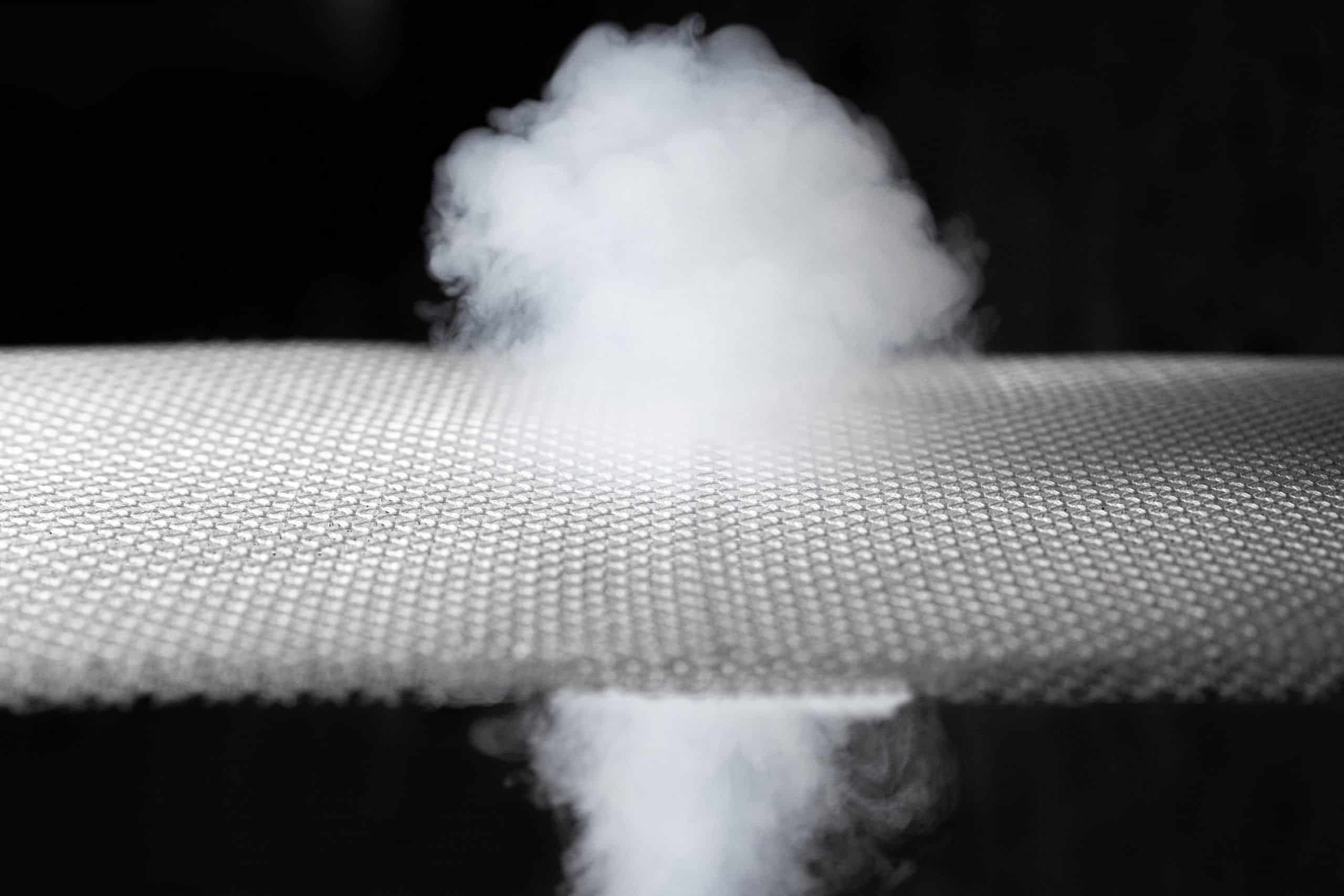
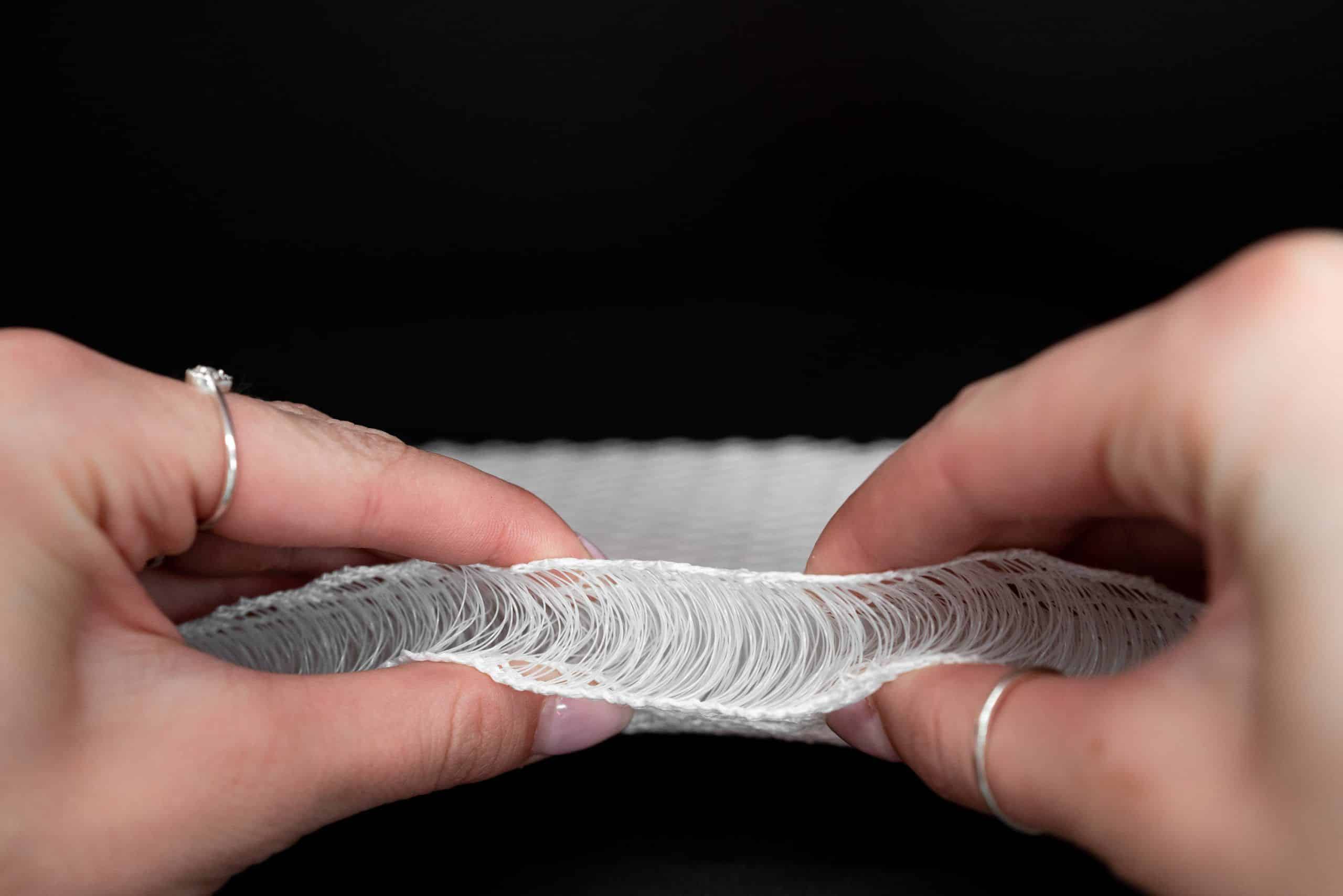
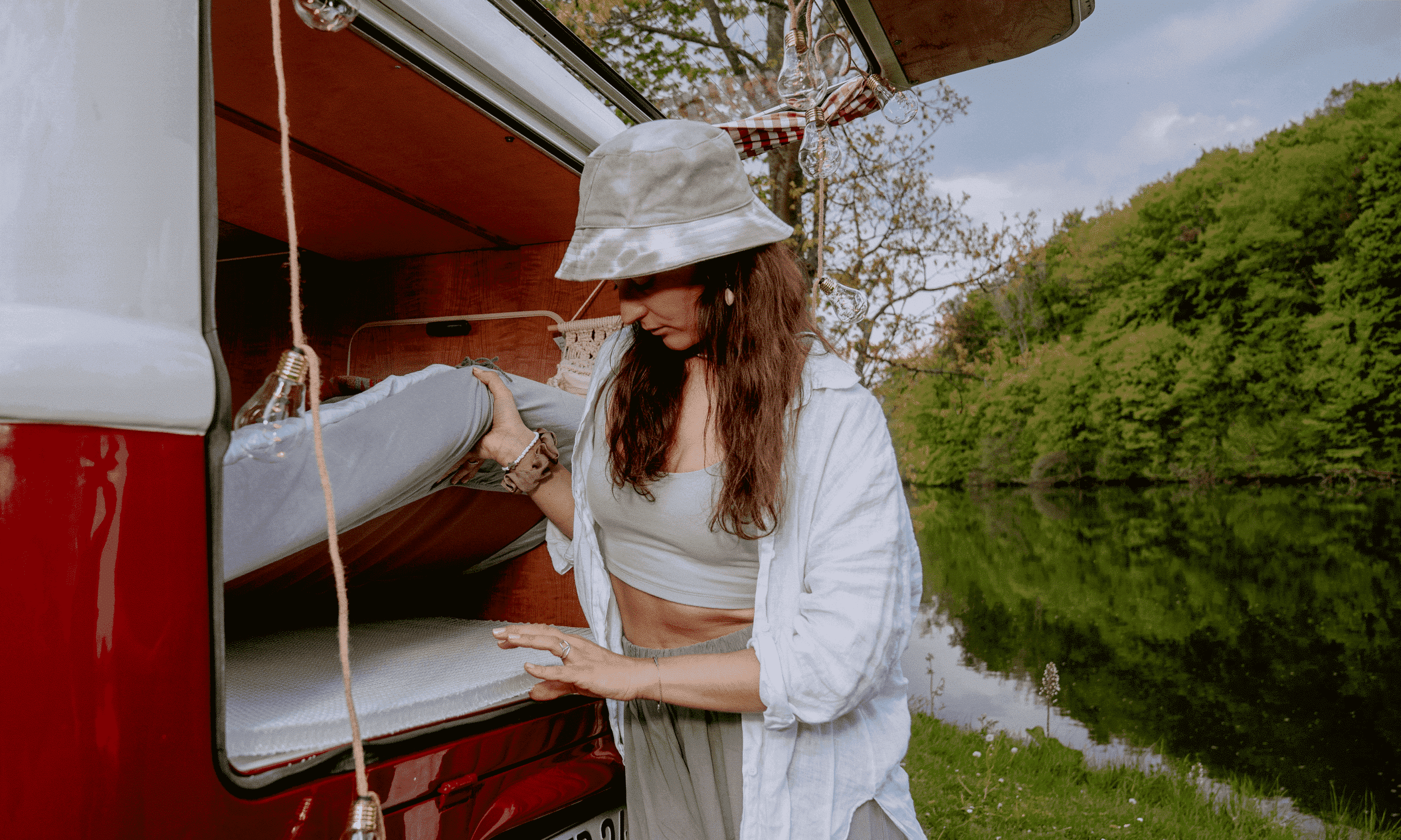
A successful holiday is characterised not least by the fact that you return to everyday life feeling refreshed. Sufficient sleep and a restful night's sleep are of central importance and you shouldn't have to do without them on a camping holiday either. A tip for motorhome newcomers in this regard is a mattress underlay. Not only does it provide greater sleeping comfort thanks to its cushioning, but the 3D Air Mesh fabric also enables good ventilation under the mattress and helps prevent mould growth and unpleasant odours. This ensures an all-round good sleeping experience, even in a motorhome or caravan. For extra padding, we recommend the Matnext Airflow Plus 20mm.
7. Protect the environment
Sustainability and environmental protection are on everyone's lips. Sustainable behaviour also plays an important role when camping with a motorhome. Apart from the fact that wild camping is only tolerated in selected countries and regions, an environmentally conscious approach to nature and campsites is also important. An important starting point for this is the cassette toilet found in many motorhomes. To protect the environment, we ask you to dispose of the contents, which often contain disinfectant substances, in the appropriate places. A tip for new motorhome owners to avoid this problem is to use biodegradable cleaning agents and additives. Biodegradable rubbish bags are also recommended. The basic rule is: leave the pitch cleaner than you found it.
For motorhome holidaymakers with a larger budget, there is also the option of installing solar panels. This not only protects the environment, but also makes you even more independent and flexible.
Motorhome holidays for beginners: you should avoid these mistakes
Finally, we'll show you some common mistakes made on your first motorhome holiday. If you avoid these and, ideally, follow the tips, nothing will stand in the way of a great trip.
Fresh air in the motorhome is very important for a pleasant feeling and a cosy atmosphere. So make sure you ventilate regularly and ensure an even exchange of air. Plants in the motorhome can also help to keep the air clean. A musty odour in the sleeping area of the motorhome can also be caused by a lack of air circulation under your mattress. The mattress underlay from Matnext also helps here, so that moisture can escape from the underside of the mattress.
As you only have a limited payload and need more fuel with every additional kilogram of weight, you should also not fill the water tank to the brim. A water tank that is one third or half full is sufficient for the journey. The rest can be filled at the pitch.
Another common mistake, especially for new motorhome owners, is not folding in the entry step of the motorhome. The protruding piece of metal can become a dangerous obstacle for cars and motorbikes. So always make sure that it is folded in before you leave a rest area!
The last common mistake concerns the motorhome kitchen. You have eaten your dinner and want to flush the leftovers down the drain, but you can already smell a bad odour? The leftovers end up in the waste water tank and rot there. Unpleasant! Our motorhome tip for beginners: use a fine sieve to catch food scraps and do most of the washing up in the campsite kitchen.